

.png)
.png)
Rigol DS8000-R Series
Precision You Can Trust
NABL-Accreditied Calibration | Available on Request
NABL-Accreditied Calibration | Available on Request
The RIGOL DS8000-R Series is a compact rack-mount digital oscilloscope designed for high-speed signal acquisition, automated testing and scalable multi-channel measurement systems. It offers bandwidths up to 2 GHz, sampling up to 10 GSa/s, memory up to 500 Mpts and waveform capture above 600,000 wfms/s. Its half-width, 1U-compatible design, remote control and synchronous triggering support laboratory, production and industrial test environments..
The RIGOL DS8000-R Series Compact Digital Oscilloscope is designed for research laboratories, electronics manufacturers, automated production systems and engineering teams that need high-performance waveform acquisition in a space-efficient rack-mount format.
Built on RIGOL’s UltraVision II technology platform, the series combines high analog bandwidth, fast sampling, deep acquisition memory, hardware waveform recording and remote operation. Its compact enclosure has no built-in display, allowing the instrument to occupy less rack space and operate in lower-temperature environments than conventional benchtop oscilloscopes.
The series is suitable for standalone use, remote laboratory operation and large multi-instrument installations.
Available Models
The RIGOL DS8000-R Series includes three models:
- DS8034-R: 350 MHz bandwidth and up to 5 GSa/s
- DS8104-R: 1 GHz bandwidth and up to 10 GSa/s
- DS8204-R: 2 GHz bandwidth and up to 10 GSa/s
All models provide:
- Four analog input channels
- One external trigger input
- Up to 500 Mpts memory depth
- Waveform capture above 600,000 wfms/s
- Hardware waveform recording
- Rack-mount installation
- Web-based remote control
- HDMI video output
- USB and LAN connectivity
- Multi-unit synchronisation support
The DS8204-R is the highest-bandwidth model and is intended for applications requiring measurement of fast edges, high-speed clock signals, communication interfaces and broadband electronic systems.
Compact Rack-Mount Design
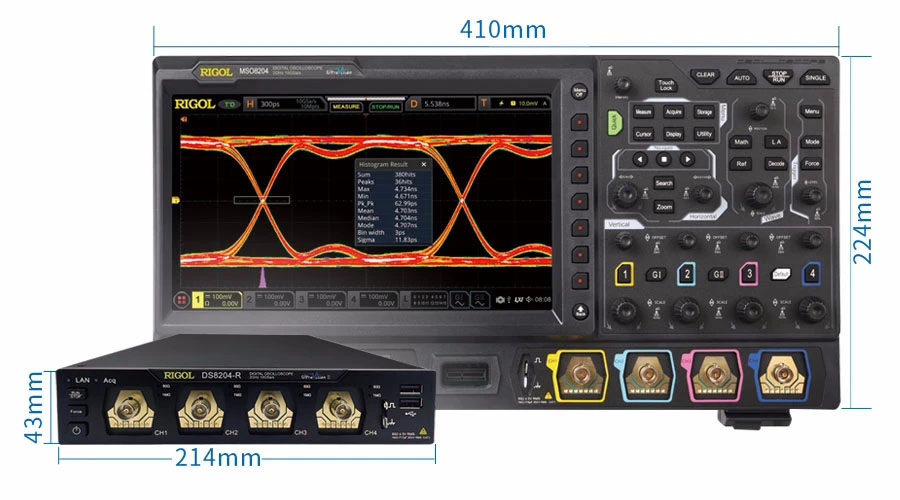
The DS8000-R uses a compact enclosure measuring approximately:
- 214 mm wide
- 43 mm high
- 478 mm deep
Without handles and rack ears, the instrument occupies approximately half the width of a standard rack and one rack unit in height.
Two units can be installed side by side in a standard 1U rack space, providing:
- Eight analog channels
- Two external trigger inputs
- Efficient rack-space utilisation
- Simplified multi-instrument integration
- Higher channel density
This compact configuration is useful in automated test equipment, production racks, research facilities and multi-channel data-acquisition systems.
Standalone Operation with External Peripherals
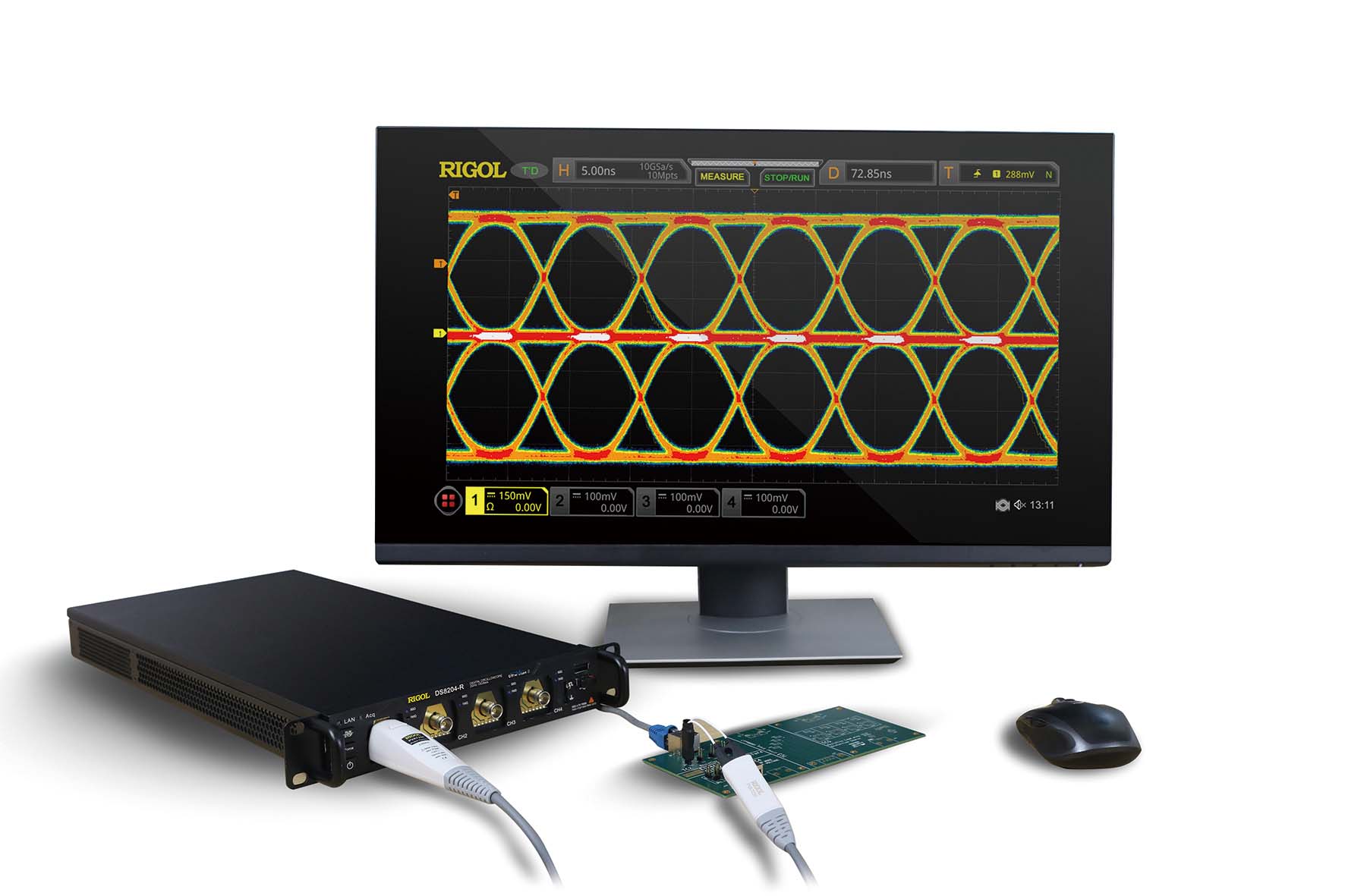
Although the DS8000-R does not include an integrated LCD screen, it can operate as a standalone oscilloscope when connected to external peripherals.
Users can connect:
- An external display through HDMI
- A mouse through USB Host
- A keyboard through USB Host
- A computer through USB Device
- A network through LAN
The external display presents the oscilloscope user interface, while the keyboard and mouse support menu navigation, waveform adjustment and numerical entry.
This allows the DS8000-R to perform many conventional oscilloscope tasks without requiring a permanently connected control computer.
High-Speed Analog Acquisition
The DS8104-R and DS8204-R provide a maximum real-time sample rate of:
- 10 GSa/s in single-channel operation
- 5 GSa/s in half-channel operation
- 2.5 GSa/s when all four channels are active
The DS8034-R provides:
- 5 GSa/s in single-channel operation
- 5 GSa/s in half-channel operation
- 2.5 GSa/s when all four channels are active
The available sample rate therefore depends on the model and number of enabled channels.
High-speed sampling supports detailed analysis of:
- Fast signal transitions
- Short-duration pulses
- Clock signals
- Communication data
- Switching waveforms
- Intermittent glitches
- Timing relationships
- High-frequency noise
Bandwidth Under Different Channel Configurations
The DS8204-R provides up to 2 GHz analog bandwidth in supported single-channel or half-channel operation.
When all four channels are active, the maximum available analog bandwidth is lower. RIGOL specifies that full-channel operation can support bandwidth up to 1 GHz.
This channel-dependent performance should be considered when planning multi-channel high-frequency measurements.
The 1 MΩ input path is limited to:
- 500 MHz on DS8104-R and DS8204-R
- 350 MHz on DS8034-R
Higher bandwidth measurements use the 50 Ω input path.
Deep Acquisition Memory
The DS8000-R supports a maximum memory depth of:
- 500 Mpts in single-channel operation
- 250 Mpts in half-channel operation
- 125 Mpts when all four analog channels are active
Deep memory allows engineers to record longer signal sequences while maintaining a useful sample rate.
It is useful for:
- Serial bus debugging
- Long communication packets
- Power-up sequence analysis
- Intermittent fault investigation
- Extended signal monitoring
- Multi-cycle waveform measurement
- Automated validation
- Detailed waveform zooming
The memory specification should be stated as up to 500 Mpts, rather than 500 Mpts per channel under all operating conditions.
Waveform Capture Above 600,000 wfms/s
The DS8000-R provides a maximum waveform capture rate of at least 600,000 waveforms per second under the specified acquisition conditions.
A fast capture rate reduces acquisition dead time and increases the probability of identifying:
- Rare glitches
- Runt pulses
- Signal dropouts
- Timing violations
- Intermittent noise
- Abnormal waveform transitions
- Unstable clock behaviour
- Occasional protocol errors
The 256-level intensity-grading display helps users distinguish frequently occurring waveform activity from rare events.
Hardware Waveform Recording and Playback
The hardware waveform recording function supports at least 450,000 waveform frames in single-channel operation.
Segmented recording stores waveform events that meet selected trigger conditions and omits inactive periods between events.
This allows users to:
- Record intermittent faults
- Replay captured waveform sequences
- Review individual frames
- Compare normal and abnormal events
- Search long acquisitions
- Analyse events after a test
- Extend the effective observation period
Hardware recording is particularly useful for production validation, environmental testing and unattended signal monitoring.
Multi-Unit Synchronisation
The DS8000-R supports synchronous triggering across multiple instruments.
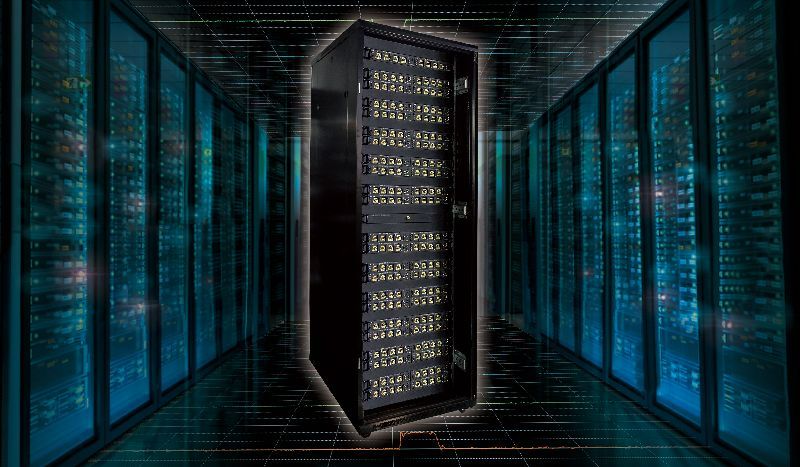
Using compatible synchronisation hardware, the system can be expanded to as many as 512 analog channels.
Multi-unit synchronisation supports:
- Common trigger distribution
- Common reference-clock distribution
- Multi-instrument acquisition
- Channel timing calibration
- Large-channel-count waveform observation
- Coordinated data collection
RIGOL specifies typical multi-device synchronisation jitter below 200 ps RMS under applicable conditions.
This makes the series suitable for:
- Large electronic systems
- Multi-phase power converters
- Battery-management systems
- Industrial control systems
- Scientific experiments
- High-channel-count production testing
- Multi-sensor signal acquisition
DS SYNC64 Synchronisation Module
The optional DS SYNC64 module supports synchronisation of multiple DS8000-R instruments.
A synchronisation module can distribute reference and trigger signals to multiple oscilloscopes. Larger systems can be constructed by combining additional synchronisation hardware.
The system supports on-site timing calibration to reduce channel-to-channel timing differences across instruments.
The required number of synchronisation modules, power splitters, cables and calibration accessories depends on the total channel count and system architecture.
Multi-Channel Acquisition Software
Optional multi-channel high-speed acquisition software provides a central interface for controlling several DS8000-R instruments.
The software can support:
- Instrument discovery
- Multi-device configuration
- Channel setup
- Synchronous acquisition
- Waveform display
- Measurement configuration
- Data recording
- Waveform comparison
- File storage
- System monitoring
This helps simplify operation when several oscilloscopes are installed in one automated or research test system.
Low-Temperature Operation
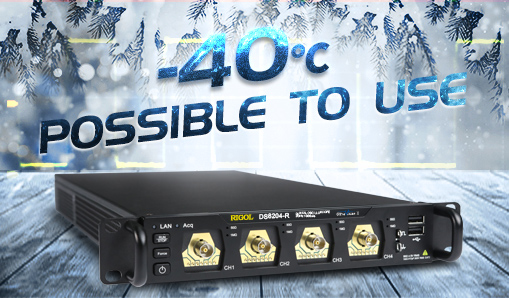
Because the DS8000-R has no integrated LCD display, it can operate at temperatures as low as −40°C.
This supports signal monitoring in:
- Environmental chambers
- Automotive testing
- Outdoor equipment
- Aerospace research
- Industrial installations
- Cold-temperature validation
- Special-purpose monitoring systems
The complete system must also use cables, probes, power supplies and control equipment rated for the intended temperature.
Remote Web Control
Web Control allows the oscilloscope to be operated through a compatible browser.
Users can enter the instrument’s IP address to access an interface that mirrors the oscilloscope controls.
Web Control supports:
- Waveform viewing
- Channel configuration
- Trigger setup
- Measurement control
- Acquisition adjustment
- Instrument information
- Network configuration
- Remote troubleshooting
This function is useful when the oscilloscope is installed in a rack, environmental chamber, restricted-access area or remote laboratory.
Advanced Trigger Functions
The DS8000-R supports multiple trigger types for isolating specific waveform conditions.
Standard trigger functions include:
- Edge
- Pulse width
- Slope
- Video
- Pattern
- Duration
- Timeout
- Runt
- Window
- Delay
- Setup and hold
- Nth edge
Optional serial protocol triggers are available for supported communication buses.
These trigger functions help engineers capture specific faults instead of reviewing large numbers of normal acquisitions.
Serial Bus Triggering and Decoding
Optional protocol-analysis packages support:
- RS232/UART
- I2C
- SPI
- CAN
- CAN FD decoding
- LIN
- FlexRay
- I2S
- MIL-STD-1553
Protocol availability depends on the installed licence.
Decoded data can be displayed alongside the electrical waveform to help identify:
- Invalid packets
- Timing errors
- Incorrect addresses
- Missing acknowledgements
- Bus faults
- Communication interruptions
- Intermittent protocol failures
Parallel bus decoding is included as a standard function.
Waveform Measurements
The DS8000-R supports automatic measurement of up to 41 waveform parameters.
Up to ten measurement results can be displayed simultaneously.
Measurement categories include:
- Voltage
- Time
- Frequency
- Pulse
- Delay
- Phase
- Overshoot
- Preshoot
- Duty cycle
- Statistical measurements
Full-memory measurement allows results to be calculated from the complete acquisition record rather than only the waveform section visible on screen.
Waveform Mathematics and FFT
Supported waveform operations include:
- Addition
- Subtraction
- Multiplication
- Division
- Integration
- Differentiation
- Square root
- Absolute value
- Logarithmic functions
- Exponential functions
- Digital logic operations
- Filtering
- Trend analysis
- FFT
The enhanced FFT function supports:
- Record lengths up to 1 Mpts
- Multiple window types
- Peak searching
- Up to 15 detected peaks
- Frequency-domain waveform analysis
FFT analysis is useful for harmonic inspection, noise investigation, frequency-component identification and power-supply analysis.
Optional Eye Diagram and Jitter Analysis
Real-time eye diagram and jitter-analysis software is available for:
- DS8104-R
- DS8204-R
It is not listed for the lower-bandwidth DS8034-R.
The optional package supports analysis of:
- Eye opening
- Eye width
- Eye height
- Timing variation
- Jitter trend
- Jitter histogram
- Jitter spectrum
- Clock stability
- Signal integrity
This function is useful for high-speed clock, data and communication-interface testing.
Optional Power Analysis
The optional power-analysis package supports:
- Power quality
- Current harmonics
- Inrush current
- Switching loss
- Safe operating area
- Modulation analysis
- Output ripple
- Power-device evaluation
The RPA246 phase-difference correction fixture is required for the built-in DS8000-R power-analysis option.
Suitable voltage and current probes must also be selected according to the measurement bandwidth, voltage, current and common-mode requirements.
Optional Arbitrary Waveform Generator
The DS8000-R supports an optional 25 MHz arbitrary waveform generator.
The official ordering information identifies the DS8000-R-AWG as a dual-channel waveform-generator option.
It can be used for:
- Circuit stimulation
- Standard waveform generation
- Arbitrary waveform generation
- Embedded-system debugging
- Frequency-response testing
- Input-signal simulation
The waveform-generator option can reduce the need for a separate signal source during basic automated tests.
Connectivity and System Integration
Available interfaces include:
- USB 2.0 Host
- USB 2.0 Device
- LAN
- LXI
- HDMI
- AUX output
- Trigger output
- 10 MHz reference input
- 10 MHz reference output
- Probe compensation output
- Optional GPIB through a USB-GPIB adapter
These interfaces support:
- Remote programming
- Automated test integration
- Reference-clock distribution
- Trigger distribution
- External display connection
- Data transfer
- Waveform storage
- Network control
- Legacy test-system integration
Applications:
The RIGOL DS8000-R Series is suitable for:
- Automated test systems
- Rack-mounted production testing
- Multi-channel data acquisition
- Research laboratories
- High-speed digital-system testing
- Embedded-system debugging
- Signal-integrity analysis
- Automotive electronics
- Battery-management system testing
- Power electronics
- Industrial automation
- Aerospace testing
- Environmental chamber testing
- Low-temperature signal monitoring
- Serial bus analysis
- Communication interface testing
- Scientific experiments
- Semiconductor validation
- Long-duration signal monitoring
- Remote laboratory operation
Why Buy from Revine Tech:
Revine Tech supplies professional oscilloscopes, probes, synchronisation accessories and test-system equipment for engineering, industrial and research applications.
Our technical team can assist with:
- Bandwidth and model selection
- Rack configuration
- Required channel count
- Multi-device synchronisation
- DS SYNC64 module selection
- Reference-clock distribution
- Trigger distribution
- Acquisition software
- Remote-control integration
- Probe selection
- Protocol decoding options
- Eye diagram and jitter analysis
- Power-analysis configuration
- Waveform-generator options
- Calibration and documentation
The final RIGOL DS8000-R price depends on the selected model, synchronisation hardware, software licences, probes, accessories and calibration requirements.